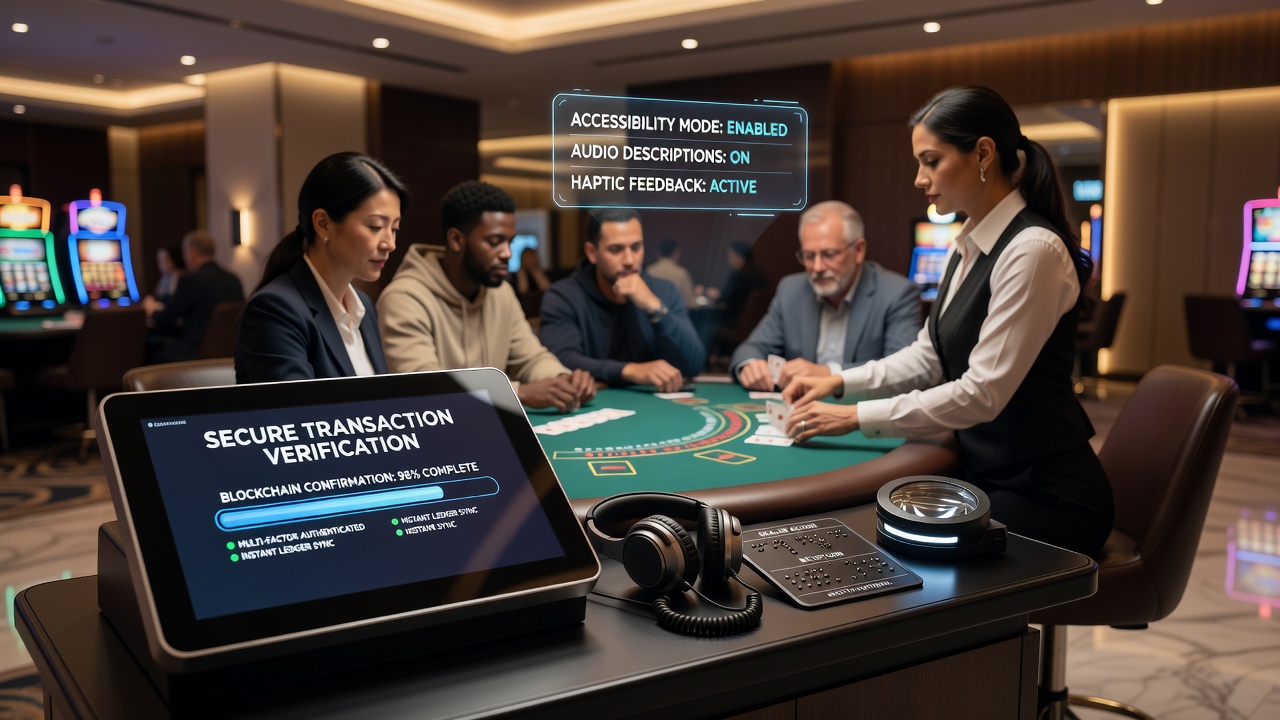
Transaction Verification Protocols Enhancing Accessibility in Live Table Game Environments
Transaction verification protocols have become central to how live table game platforms manage player access and security across mobile and desktop environments, wth data from regulatory filings showing increased integration of identity checks that also support accessibility features like real-time captioning and adaptive interfaces. These systems handle payment confirmations while embedding tools that allow users with visual or motor impairments to navigate tables without interruption, and recent reports indicate that operators in multiple jurisdictions updated their protocols during August 2026 to align with emerging standards.
Core Components of Verification Systems in Live Gaming
Verification protocols typically combine multi-factor authentication with biometric options, yet they now extend to accessibility layers that adjust interface elements based on user profiles, such as enlarged betting controls or audio prompts for game status. Researchers at institutions tracking digital gaming trends note that platforms using these combined approaches report higher retention rates among diverse user groups, while compliance data from the Nevada Gaming Control Board highlights how verification steps can be streamlined without compromising security when accessibility modules are built in from the start.
Live table games, including blackjack and roulette streams, rely on these protocols to confirm deposits before play begins, and the same frameworks often trigger features like haptic feedback for mobile users or text-to-speech outputs that describe card distributions. Observers note that this overlap reduces friction for players who require both secure transactions and adaptive tools, creating pathways that connect financial validation directly to customized game views.
Accessibility Features Tied to Verification Workflows
Many platforms embed accessibility options within the verification flow itself, where users complete identity checks through voice-guided forms or screen-reader compatible dashboards that simultaneously confirm payment methods. Data from industry analyses shows these integrations became more widespread after updates in early 2026, with operators incorporating standards that let players adjust contrast levels or enable sign-language overlays during dealer interactions. The result connects secure entry points to ongoing game accessibility, allowing uninterrupted participation once initial checks clear.

Case examples from operators in regulated markets illustrate how verification protocols can flag and accommodate specific needs, such as routing users to simplified payment interfaces that also support keyboard navigation. Experts tracking these developments point to studies where platforms that synchronized verification with accessibility saw measurable improvements in session completion rates, particularly among users relying on assistive technologies during high-stakes table sessions.
Regulatory Influences on Combined Systems
Regulatory bodies across regions have shaped these intersections through guidelines that require both robust transaction security and equal access provisions. For instance, frameworks from the Australian Communications and Media Authority emphasize verification methods that incorporate inclusive design principles, while similar directives in Canadian provinces tie payment approvals to features that assist players with disabilities. Reports released around August 2026 documented how these overlapping requirements prompted software providers to develop unified modules that handle identity confirmation and accessibility adjustments in a single process.
Industry organizations like the European Gaming and Betting Association have published findings on how verification protocols influence live game accessibility, noting patterns where automated checks enable quicker activation of personalized interfaces without separate registration steps. Those who've examined compliance records find that jurisdictions enforcing both elements together experience fewer reported access barriers compared to segmented approaches.
Technical Integration Examples and Data Patterns
Technical setups often involve APIs that link payment gateways to accessibility engines, allowing real-time adjustments such as auto-enabling subtitles when verification detects certain user preferences. Research from academic sources on digital inclusion in gaming indicates that these connections produce distinct usage patterns, with verified sessions showing extended play times when accessibility tools activate seamlessly. Platforms in Asia-Pacific markets, for example, have implemented verification sequences that include optional voice authentication, which doubles as a command system for table actions like placing bets or viewing statistics.
Payment data patterns further reveal how verification impacts accessibility retention, as operators analyze transaction success rates alongside feature usage logs to refine both security and interface elements. One documented instance involved a major provider adjusting its protocols mid-2026 to reduce verification steps for returning users, which in turn expanded access to live table features for those using assistive devices.
Conclusion
The convergence of transaction verification protocols and live table game accessibility features continues to evolve through coordinated technical and regulatory efforts, with evidence from multiple markets demonstrating practical implementations that support secure and inclusive participation. Ongoing data collection through August 2026 and beyond will likely highlight further refinements in how these systems align across global platforms.