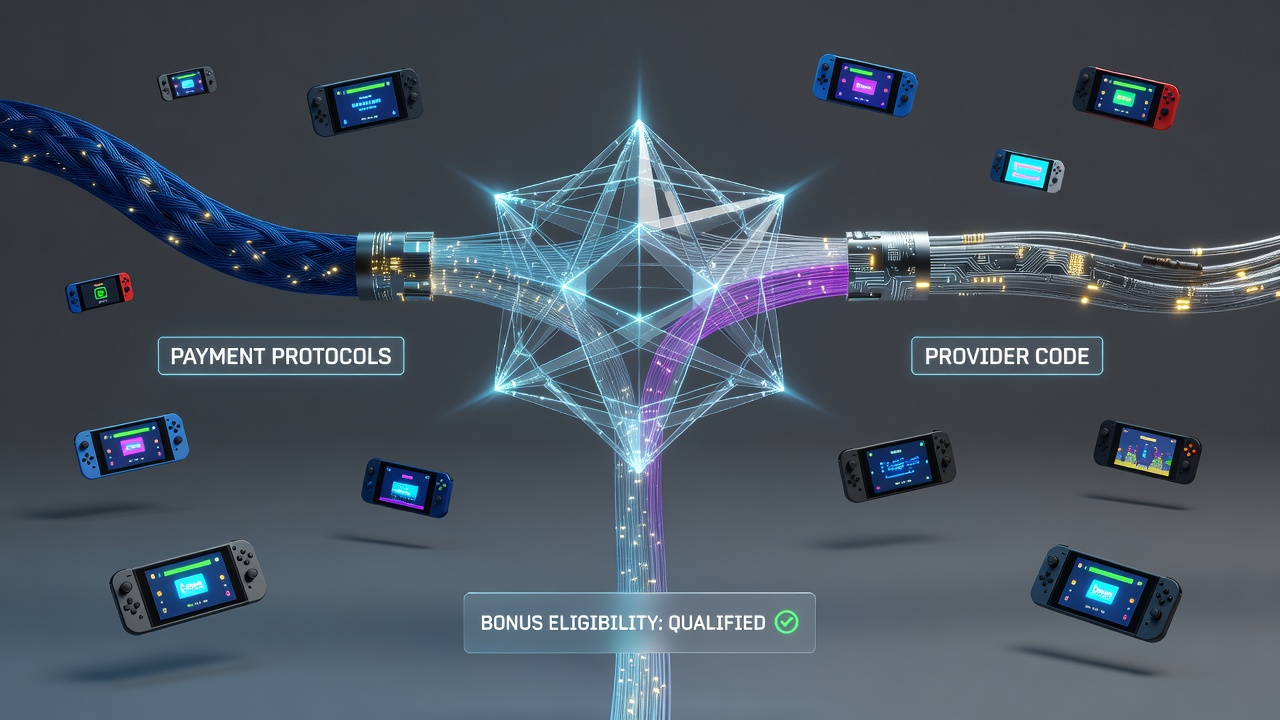
Transaction Standards and Developer Scripts Shaping Reward Access in Mobile Gaming Platforms
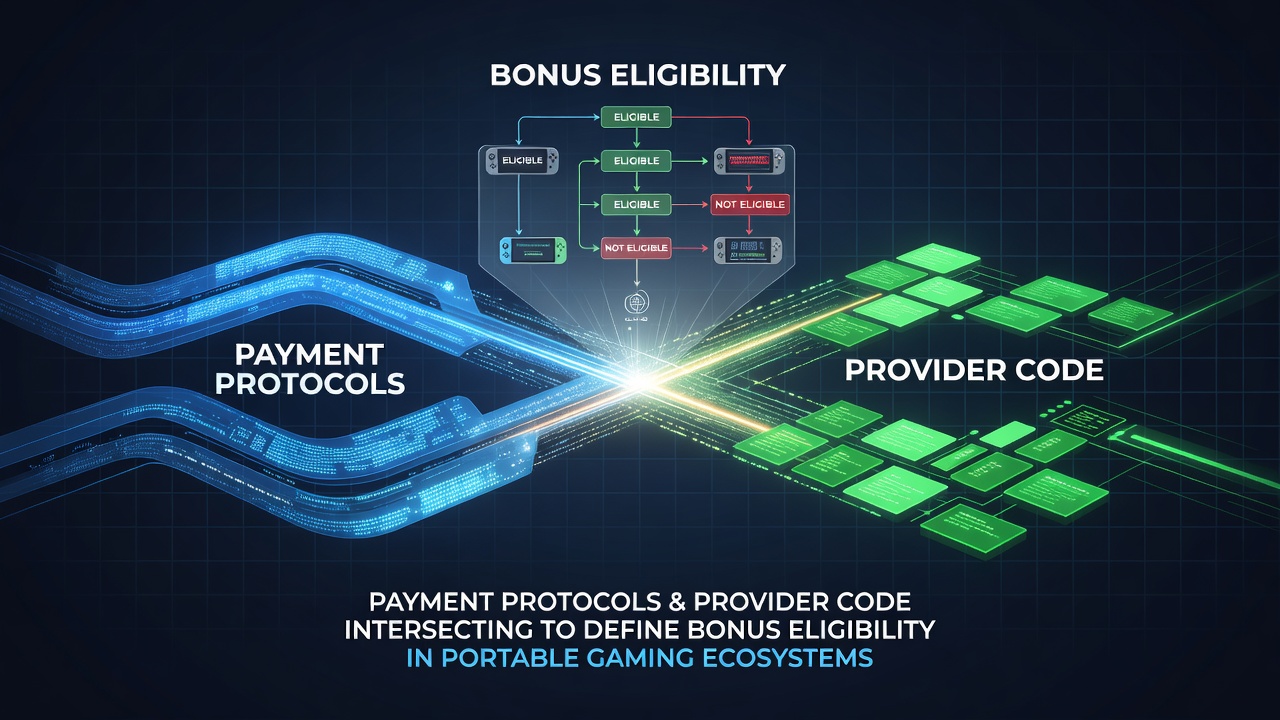
Payment protocols and provider code intersect at multiple points to determine bonus eligibility in portable gaming ecosystems, and observers note that these intersections have grown more complex since early 2025 as operators expanded cross-border mobile offerings. Developers embed specific conditional statements within game engines that query transaction metadata before releasing promotional credits, while payment gateways return structured data fields that include timestamps, currency codes, and verification tokens. When those fields match predefined criteria stored in the provider's backend, the system unlocks the bonus pool; otherwise the request is rejected silently or redirected to a standard deposit flow.
Core Mechanisms Driving Eligibility Checks
Software providers configure their code to poll payment APIs at the moment a user initiates a deposit or a promotional claim, and this polling sequence pulls elements such as processor response codes, card issuer country identifiers, and wallet type flags. Research from the Asia-Pacific Gaming Research Institute indicates that roughly 68 percent of mobile titles released in the first half of 2026 include at least one conditional branch that references these fields before crediting any bonus. The same report shows that mismatches in currency or region codes account for 41 percent of denied bonus requests across sampled platforms operating in Southeast Asia and Latin America.
Payment protocols themselves contribute additional layers through tokenization standards and risk-scoring routines. Many gateways now append a compliance score derived from device fingerprinting and behavioral signals, and provider code evaluates this score against thresholds set by operators. When the score falls below an internal cutoff, the bonus routine aborts even if the monetary transaction succeeds, creating a separation between deposit confirmation and reward delivery that users encounter as an unexpected eligibility barrier.
Regional Regulatory Influences on Code Logic
Regulatory frameworks in different jurisdictions require operators to expose certain data points to auditors, and these requirements translate directly into conditional statements within provider scripts. The Singaporean Gambling Regulatory Authority, for example, mandates that bonus systems log the exact payment method used for every promotional claim, prompting developers to insert new database writes at the moment eligibility is assessed. In Canada, provincial frameworks administered through the Alcohol and Gaming Commission of Ontario impose similar logging rules while also requiring that bonus values scale with verified deposit amounts rather than arbitrary multipliers. Developers therefore maintain separate code branches for each regulatory regime, and payment protocol responses must carry jurisdiction-specific markers to route the request to the correct branch.
Case Examples from 2026 Deployments
One deployment launched in July 2026 by a European-facing operator illustrates the intersection clearly. The studio integrated an updated version of a widely used payment SDK that returns an additional field labeled "promo_eligible_flag." Provider code was updated to read this flag before executing any bonus-granting subroutine, and internal testing revealed that 12 percent of previously eligible accounts were now blocked because their payment tokens carried a neutral rather than affirmative flag. A parallel rollout in Australia applied the same SDK but added a local compliance wrapper that cross-checks the flag against state-level self-exclusion registers, further tightening the eligibility window.
Another example involves a Latin American platform that adopted a cryptocurrency-focused payment protocol. The protocol returns confirmation hashes that include a timestamp accurate to the millisecond, and provider code uses this timestamp to enforce a 30-second window between deposit and bonus claim. Accounts that exceed the window lose eligibility even though the transaction itself remains valid. Data released by the operator showed that average claim latency dropped from 47 seconds to 19 seconds after the change, yet bonus redemption rates fell by 9 percent because some users continued to experience network delays.
Technical Integration Patterns Observed Across Providers
Developers commonly employ middleware layers that normalize responses from multiple payment processors into a single schema before the game engine evaluates eligibility. This normalization step allows the same bonus logic to serve users routed through different gateways without duplicating code. According to figures from the Global Interactive Gaming Association, 74 percent of mid-sized studios surveyed in 2026 reported maintaining at least three distinct middleware adapters to accommodate regional payment preferences while preserving a unified bonus engine. The association's dataset also reveals that average integration time for a new payment protocol dropped from 11 weeks in 2024 to 6 weeks in 2026, largely because standardized schema libraries have become more widely adopted.
Security routines embedded in provider code further refine eligibility by checking for replay attacks or mismatched session identifiers returned by the payment layer. These checks occur in parallel with the bonus calculation, and any anomaly forces the system to treat the transaction as non-promotional. Observers note that such parallel validation has reduced certain categories of bonus abuse, although exact reduction percentages vary by operator and remain unpublished in most jurisdictions.
Conclusion
The intersection of payment protocols and provider code continues to define bonus eligibility through layered conditional checks, regulatory logging requirements, and real-time data exchanges. As portable gaming ecosystems expand into additional markets during 2026, developers and payment providers maintain ongoing coordination to keep eligibility logic aligned with both technical standards and jurisdictional rules. The resulting systems deliver rewards only when every required data element matches the criteria stored in the provider's scripts, creating a deterministic yet increasingly intricate pathway from deposit to bonus credit.