
Tracing Software Provider Choices That Shape Distinctive Free Spins Patterns in Ranked Mobile Platforms
Software providers select specific mechanics when building free spins features for mobile slots, and those decisions create recognizable patterns that players encounter on ranked platforms. Developers adjust trigger rates, multiplier structures, and retrigger possibilities based on platform algorithms and regional regulations, which leads to distinct gameplay rhythms across different apps. In May 2026 industry observers noted continued refinement in these choices as providers responded to updated mobile ranking criteria that emphasize engagement metrics and payout consistency.
Core Mechanics Behind Provider Selections
Providers determine free spins frequency through mathematical models that balance house edge with player retention targets. Some studios favor frequent short bursts of spins with modest multipliers while others implement rarer entries that deliver higher average returns when triggered. These choices directly influence how mobile platforms rank titles in search results and recommendation engines because ranking systems track session length and bonus interaction rates. Data collected through platform APIs shows that games with medium-frequency free spins tend to maintain steadier positions in weekly leaderboards compared with titles that rely on jackpot-linked bonuses.
Regional Regulatory Influence on Design
Regulatory frameworks in various jurisdictions guide how providers configure free spins parameters for mobile distribution. The Nevada Gaming Control Board requires transparent probability disclosures that affect multiplier scaling in free spins rounds, whereas the Australian Communications and Media Authority emphasizes responsible gaming limits that cap retrigger chains. Providers adapt their base templates to meet these standards before submitting builds to mobile platform operators. As a result, the same underlying slot title can display noticeably different free spins behavior when accessed through platforms serving different regions.
One study released by the Canadian Centre for Gaming Research in early 2026 examined twenty mobile titles across five providers and found that adjustments to free spins volatility produced measurable shifts in average session duration. Titles configured for lower volatility appeared more often in top-ten lists on platforms popular with casual users, while higher-volatility versions clustered in sections aimed at experienced players.
Integration With Mobile Ranking Algorithms
Ranked mobile platforms employ algorithms that weigh user retention signals heavily when ordering search results and featured sections. Software providers therefore optimize free spins sequences to generate longer play sessions without triggering regulatory flags for excessive bonus frequency. Some developers embed variable reel modifiers that activate only during free spins, creating layered experiences that keep engagement scores elevated. These modifications appear in platform analytics as distinct clusters of user behavior, allowing ranking systems to categorize games according to observed patterns rather than stated specifications alone.
Provider-Specific Pattern Signatures
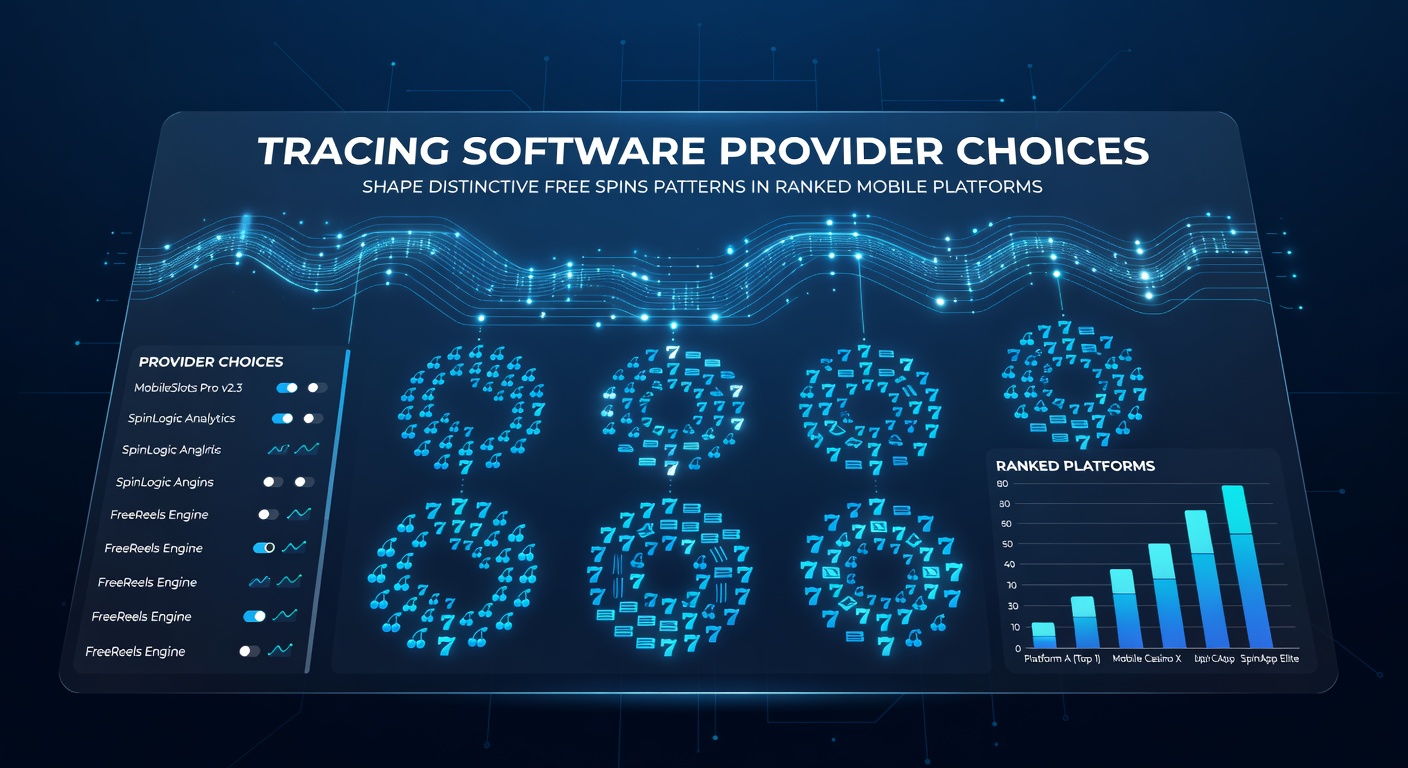
Each major provider leaves identifiable traces in the free spins structures they deliver. One studio consistently applies stacked wilds that expand only during bonus rounds, producing longer consecutive win sequences than competitors who distribute wilds evenly across base game and bonus modes. Another provider favors progressive multiplier ladders that reset after each retrigger, which creates a different rhythm of escalating returns. Mobile platforms record these signatures through telemetry data and use the information to refine category filters and personalized recommendations. Observers note that players who switch between platforms sometimes recognize familiar patterns even when game titles differ, because the underlying provider logic remains consistent.
Emerging Trends Observed in 2026
By May 2026 several providers had begun incorporating adaptive difficulty scaling within free spins rounds, adjusting multiplier ranges according to real-time player behavior metrics supplied by the host platform. This approach allows a single game build to exhibit different statistical profiles depending on the ranking tier of the app it runs on. Early deployment reports indicate that adaptive scaling helps titles maintain placement stability when platforms update their ranking criteria, because the game can meet multiple engagement thresholds without requiring separate versions for each region. Industry reports compiled by the European Gaming and Betting Association document a gradual shift toward these dynamic systems as providers seek to reduce certification costs associated with multiple regional builds.
Conclusion
Software provider decisions about free spins mechanics continue to shape how mobile platforms rank and present slot content. Through adjustments to frequency, volatility, and adaptive features, developers create distinctive patterns that align with both regulatory requirements and algorithmic preferences. These choices produce measurable differences in player experience across ranked apps, and the resulting data feeds back into further refinements by both providers and platform operators. As mobile gaming infrastructure evolves, the relationship between provider configuration and platform ranking remains a central factor in determining which titles gain visibility and sustained play.