
Sudden Resignation Rocks Macau: Finance Secretary Tai Kin Ip Steps Down from Key Role Overseeing World's Top Gambling Hub
The Announcement That Caught Observers Off Guard
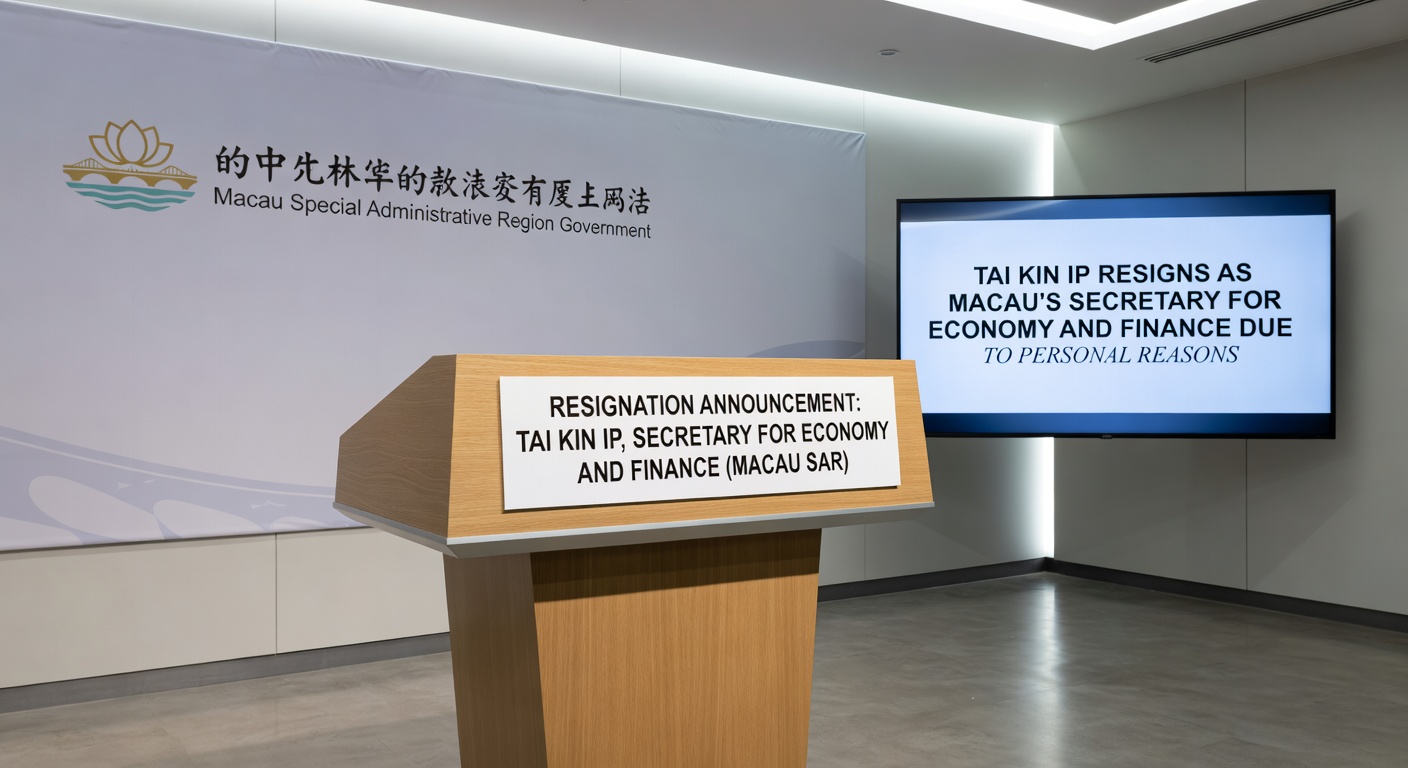
Tai Kin Ip, Macau's Secretary for Economy and Finance, resigned citing personal reasons, a move approved by China's State Council following a proposal from Chief Executive Sam Hou Fai; the resignation took effect immediately on April 16, 2026, sending ripples through the region's administrative circles and beyond. Macau, long recognized as the world's largest gambling hub where casino revenues dwarf those of Las Vegas by a wide margin—pulling in over $30 billion annually in recent years—now faces this unexpected leadership shift at a pivotal department. Those tracking the sector note how such positions directly influence policies shaping the industry's growth, regulation, and recovery from past economic pressures like the COVID-19 downturn that slashed revenues by more than 70% in 2020 before a rebound.
But here's the thing: Ip's departure comes after just over a year in the role, having assumed responsibilities in late 2024, a period marked by steady efforts to diversify Macau's economy while bolstering its core gambling revenue streams; experts point out that his oversight extended to major operators including Sands China, Wynn Macau, MGM China, SJM Holdings, Melco Resorts, and Galaxy Entertainment, all of which navigate strict licensing renewals and performance targets set by Beijing. The timing, smack in the middle of 2026's bustling tourism season, underscores the seamless transition authorities aim to maintain, with no disruptions signaled to daily operations.
Tai Kin Ip's Tenure: Navigating a $30 Billion Behemoth
Since stepping into the Secretary position late in 2024, Tai Kin Ip guided policies for Macau's economy and finance sectors, where gambling generates about 80% of government revenue; data from the Macau Gaming Inspection and Coordination Bureau (DICJ), the primary regulator, reveals how the six licensed concessionaires under his watch collectively reported gross gaming revenue exceeding $26 billion in 2025 alone, rebounding strongly post-pandemic with visitor numbers surpassing 30 million. Observers familiar with the landscape recall Ip's involvement in initiatives like promoting non-gaming diversification—think entertainment complexes, conventions, and MICE (meetings, incentives, conferences, exhibitions)—although gambling remains the undisputed kingpin.
And while his exact contributions stay tied to official channels, records show active engagement during concession renewal processes in 2022 that carried forward, ensuring operators met investment commitments totaling billions in infrastructure; Sands China, for instance, poured funds into Cotai Strip expansions, Wynn Macau focused on luxury upgrades, and Galaxy Entertainment ramped up mass-market flooring, all under the finance secretary's purview. What's interesting is the personal reasons cited—no scandals, no policy clashes detailed publicly—leaving room for speculation among analysts, yet authorities emphasize continuity as the priority.
Take one case from early 2025: Ip's team coordinated fiscal measures amid fluctuating mainland Chinese visitor flows, which account for over 70% of gamblers; figures indicate a 15% year-over-year increase in group tours that year, bolstering VIP and mass segments alike. MGM China and Melco Resorts, known for integrated resorts blending hotels, retail, and gaming, benefited from such stability, as did SJM Holdings transitioning from traditional to modern venues. Those who've studied Macau's model know it's not rocket science—the system's success hinges on high-level coordination between local executives, Beijing approvals, and operator compliance.
Macau's Gambling Empire: Context for the Leadership Void
Macau's ascent as the global gambling capital traces back to 2002 liberalization, when Portugal's former colony opened to foreign operators; today, that $30 billion industry—peaking at $44.2 billion in 2013 before dips—employs tens of thousands directly and fuels infrastructure like the HK-Zhuhai-Macau bridge. Researchers at institutions like the University of Macau have documented how secretaries like Ip balance Beijing's anti-corruption drives, which purged high-rollers post-2014, with revenue recovery strategies; post-2022, concessions renewed for another decade with strings attached, demanding 10% non-gaming revenue by 2025 targets that operators chased diligently.
Yet the rubber meets the road in daily oversight: Ip's department monitored anti-money laundering protocols, junket regulations (those VIP intermediaries halved since crackdowns), and tax collections hovering at 35-40% of gross revenue; Galaxy Entertainment, leading mass-market play, and Wynn Macau, VIP stalwart, exemplify the diverse portfolio he managed. And now, with Ip out, the spotlight turns to how seamlessly policies persist—especially as 2026 projections from analysts forecast another revenue uptick, potentially hitting $32 billion if tourism sustains.
People often find parallels with Las Vegas, but data underscores Macau's scale; Nevada Gaming Control Board reports show the U.S. state's 2025 Strip revenue at around $11 billion, less than half Macau's haul despite similar operator names like MGM and Wynn. It's noteworthy that cross-border synergies, from shared tech to talent, keep the ecosystem tight-knit, making leadership transitions like this one closely watched by global stakeholders.
Interim Leadership and the Path Forward
Chief Executive Sam Hou Fai steps in to handle the Secretary's duties temporarily, a common protocol in Macau's governance structure where the top executive absorbs portfolios during vacancies; authorities already signal preparations to nominate a successor, again for China's State Council nod, ensuring alignment with national priorities. Turns out, such approvals typically wrap in weeks, as seen in prior reshuffles; Hou Fai, elected in 2022 for a five-year term, brings his own economy background, having previously chaired the Legislative Assembly's economy committee.
So while Ip's exit wraps abruptly, the machinery grinds on—casino floors stay packed, license audits proceed, and diversification pushes continue; observers note no market jitters yet, with shares of listed operators like Sands China (traded in Hong Kong) holding steady post-announcement. That's where the writing's on the wall: Macau's model thrives on stability, and this pivot tests it once more.
Conclusion
Tai Kin Ip's immediate resignation as Macau's Secretary for Economy and Finance, greenlit by China's State Council on April 16, 2026, marks a swift change at the helm of a $30 billion gambling juggernaut; with Sam Hou Fai bridging the gap and a successor nomination underway, the focus remains on uninterrupted oversight of giants like Sands China, Wynn Macau, and peers. Data and history alike suggest resilience in this tightly regulated hub, where personal transitions rarely derail the broader momentum—yet those watching closely know every shift carries weight in an industry that defines Macau's fortunes.