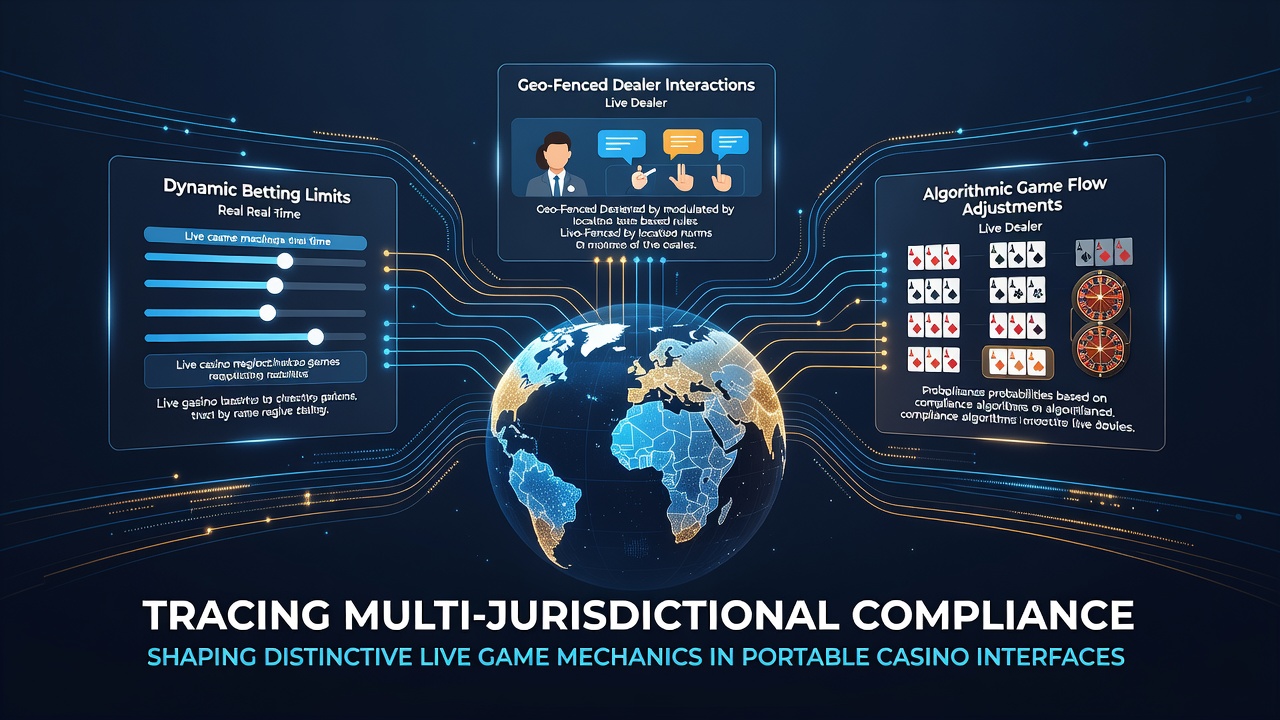
Regulatory Divergence Across Jurisdictions Shapes Live Dealer Interactions Within Mobile Casino Environments
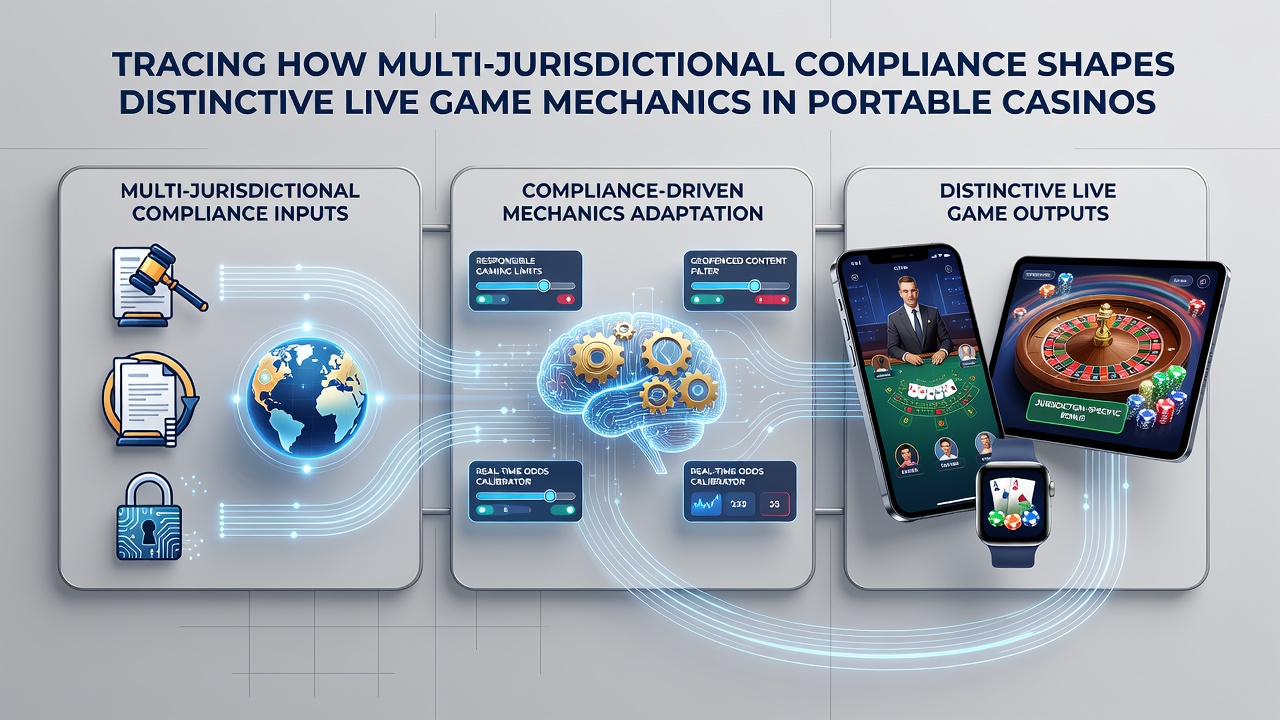
Multi-jurisdictional compliance creates layered requirements that operators must satisfy simultaneously, and these rules directly influence how live dealer games function on portable devices. Different regions impose distinct standards on game speed, betting increments, chat moderation, and visual verification protocols, which forces software developers to build modular mechanics that adapt based on a player's detected location.
Core Regulatory Frameworks and Their Mechanical Implications
Authorities in various markets establish parameters around real-time interaction that differ in scope and detail. In the United States, state-level bodies such as the New Jersey Division of Gaming Enforcement mandate specific latency thresholds and identity verification sequences before each betting round begins, while Australian state regulators focus on mandatory pause intervals between hands to support responsible play measures. These variations require mobile interfaces to adjust dealer pacing automatically, altering the flow of live blackjack or roulette sessions depending on which set of rules applies at any given moment.
European markets outside the United Kingdom add further complexity through data protection statutes that limit how player information appears during live streams. Operators respond by implementing region-specific overlays that obscure certain identifiers on mobile screens while preserving core gameplay elements. The result appears in the form of customized camera angles and reduced chat functionality that still meets local transparency rules without disrupting the overall session continuity.
Technical Adaptations in Portable Interfaces
Developers integrate geolocation triggers that activate compliance modules the moment a connection is established. When a user crosses into a jurisdiction with stricter wagering limits, the mobile platform dynamically narrows bet ranges mid-session and displays updated minimums without requiring a full reload. This approach maintains session integrity while satisfying local caps that can differ by several multiples between neighboring regions.
Live dealer software must also accommodate differing rules on side bets and progressive features. Certain Canadian provincial frameworks permit rapid-fire bonus rounds tied to live tables, whereas some Asian markets restrict these elements to fixed intervals. Portable interfaces therefore embed conditional logic that enables or disables these options based on detected coordinates, creating distinctive gameplay rhythms that feel native to each regulatory environment.
Case Examples from Recent Implementation Patterns
One documented instance involves operators serving both Michigan and Pennsylvania markets, where live dealer interfaces apply different verification checkpoints before each new shoe in blackjack. Michigan rules emphasize continuous facial recognition checks during high-stakes hands, prompting the mobile app to insert brief camera activations that do not appear in the Pennsylvania version of the same game. These adjustments emerged clearly in platform updates rolled out around June 2026, reflecting ongoing alignment with evolving state guidelines.
Another pattern surfaces in markets where Australian and European rules intersect for operators with dual licensing. Here the mobile interface toggles between enforced cooling-off prompts and optional quick-resume features depending on the active jurisdiction. The underlying live stream remains identical, yet the surrounding mechanics shift to meet separate responsible gaming mandates without altering core dealer actions.
Payment and Session Integration Challenges
Compliance extends into how funds move during live sessions on portable devices. Jurisdictions that require real-time transaction logging force additional confirmation steps between bets, lengthening the interval between dealer decisions. Mobile platforms counter this by pre-authorizing smaller reserve amounts that convert into active bets only after regulatory checks clear, preserving perceived speed while satisfying audit trails.
Observers note that these layered requirements have led to increased use of containerized game engines. Each container holds jurisdiction-specific parameters that load independently, allowing a single live dealer feed to serve multiple regulatory zones through tailored interface skins rather than separate applications.
Conclusion
Multi-jurisdictional compliance continues to drive measurable differentiation in live game mechanics across portable casino interfaces. The resulting adaptations range from dynamic bet limits and verification sequences to region-specific chat and pause functions, all managed through modular code that responds to location data. As regulatory landscapes evolve, these technical responses remain central to delivering compliant yet functional live experiences on mobile platforms.